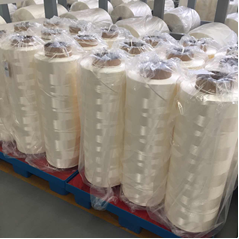

Polyacrylonitrile fiber,also known as
acrylic fiber or PAN fiber,it has higher elastic modulus,tensile strength and
anti-UV properties,anti-high temperature and cold performance than
polypropylene fiber,As cement concrete and asphalt concrete ribs,it can
significantly increase the concrete tensile strength,anti-fatigue strength and
anti-flexural strength,significantly improving the crack resistance of concrete
at early age.Used in the asphalt significantly improve asphalt adhesion,high
temperature stability,fatigue durability and low temperature cracking and to
prevent reflection cracks,effectively improve the tensile,shear,compressive and
impact strength.The true role and prospects for the use of polyacrylonitrile
fibers in concrete has been the engineering sector awareness and acceptance.
SPECIFICATION:
|
MATERIALFORM |
POLYACRYLONITRILE |
THETYPEOFTHEFIBER |
BUNCHYMONOFILAMENT |
|
IDENTICALDIAMETER(ΜM) |
12 |
DENSITY(G/CM3) |
1.18 |
|
LENGTH(MM) |
5 |
MODULUSOFELASTICITY(MPA) |
≥17000 |
|
ELONGATIONATBREAK(%) |
13 |
TENSILESTRENGTH(MPA) |
≥900 |
|
COLOUR |
FAINTYELLOW |
ANTI-ACID |
BETTER |
|
MOISTURE(%) |
<1 |
MELTPOINT(C) |
240MIN |
ADVANTAGES OF USING
PET FIBER:
Sustainability: Gives a second life to
plastic waste, reducing landfill and ocean pollution. It has a lower carbon
footprint compared to steel fiber or wire mesh.
Corrosion Resistance: Unlike steel,
PET is inert and will not rust, making it ideal for structures exposed to
moisture and chlorides.
No Placement Issues: Unlike wire mesh,
which can be displaced during concrete placement, fibers are uniformly
distributed throughout the mix, ensuring consistent reinforcement.
Improved Safety: Eliminates the risk
of workers tripping over or cutting themselves on exposed wire mesh.
Cost-Effective: Reduces labor costs
associated with handling, placing, and tying wire mesh.
STEP-BY-STEP
APPLICATION GUIDE (FOR CONCRETE)
Materials Needed:
PET fibers (dosage as per design, typically
0.5% to 1.0% by volume of concrete)
Ready-mix concrete
Standard concrete placing and finishing
equipment
Procedure:
Design & Dosage: Determine the
required fiber dosage (kg/m³ or lbs/yd³) based on the project's structural and
performance requirements. Consult with a structural engineer or the fiber
manufacturer.
Batching:
At the Plant (Preferred Method): The
fibers are added directly to the concrete mixer at the batching plant. This
ensures the most uniform distribution.
On-Site: If necessary, fibers can be
slowly added to the concrete truck's drum while it is mixing. Avoid adding them
in a single clump.
Mixing: Ensure adequate mixing time (usually a few extra minutes) to
fully separate and distribute the fibers throughout the mix. The concrete
should have a uniform appearance.
Placing &
Consolidating: Place and consolidate the concrete
as normal. Vibration is acceptable and will not negatively affect the fibers.
Finishing:
Bleeding Water: Wait for the bleed water to evaporate before starting
finishing operations. PET fiber concrete may have slightly reduced bleeding.
Timing: Do not over-finish or "work" the surface with water,
as this can bring fibers to the surface.
Surface: Some fibers may be visible on the surface; this is normal and does
not affect performance.
Curing: Crucial Step. Begin curing immediately after finishing using standard methods (water spraying, membranes, or coverings) to prevent plastic shrinkage cracking and ensure strength development.